Residential renovations in established Greensboro neighborhoods demand careful logistics to keep properties intact while processing tons of raw construction waste. Standard municipal curbside garbage trucks in…
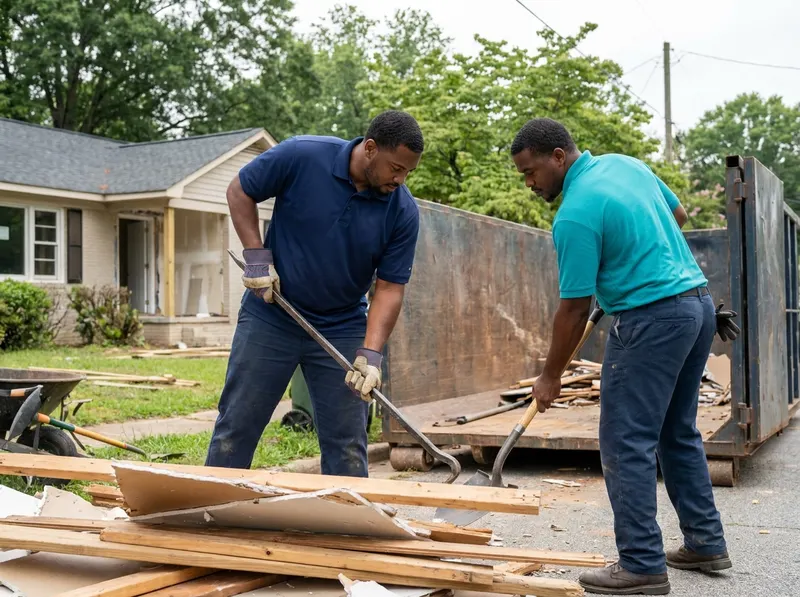
Residential renovations in established Greensboro neighborhoods demand careful logistics to keep properties intact while processing tons of raw construction waste. Standard municipal curbside garbage trucks in Greensboro strictly prohibit bulky construction debris, meaning heavy tear-outs from kitchen gutting in Sunset Hills or roof framing repairs in historic Fisher Park require dedicated roll-off collection. Construction and demolition solid waste collection functions differently from standard household cleanouts because materials like wet drywall, plaster, and ceramic floor tile accumulate weight rapidly. A 10-yard roll-off container accommodates roughly 4 pickup truck beds of dense tile or plaster, whereas a 20-yard roll-off handles up to 8 pickup loads of mixed framing, subflooring, and lumber from multi-room renovations. Choosing the correct capacity prevents unexpected overage fees at the landfill scales, where excess weight beyond the included tonnage allowance incurs per-ton municipal disposal charges.
Protecting residential property during the loading process requires preventative equipment and calculated container placement. Heavy roll-off steel wheels can gouge cured asphalt, crack decorative stamped concrete, or leave deep wheel ruts across turf if placed carelessly. Drivers position solid wood boards beneath the container contact points before lowering the bin, shielding driveway surfaces throughout Irving Park, Latham Park, and Westerwood. Homeowners managing single-room tear-outs trade off the compact footprint of smaller containers against the higher debris allowance of larger units; a 15-yard container preserves car access on narrow Lindley Park driveways while still holding up to 60 bundles of removed asphalt shingles. If a project runs ahead of schedule or requires an additional two days for punch-list debris, extending the on-site rental window keeps the site orderly without premature pickup interruptions.
Preparing your job site ensures uninterrupted collection and compliant disposal under North Carolina solid waste regulations. Step 1: Clear parked vehicles and overhead tree limbs to ensure a 60-foot linear path for the delivery truck. Step 2: The delivery driver places protective wood runners on the designated driveway spot and sets the container level. Step 3: Fill the container uniformly, keeping all lumber, drywall, and structural debris level with the top rim so transit tarps deploy securely. Step 4: Call (743) 249-2953 when loading wraps up to schedule pickup and transport to licensed Guilford County disposal facilities.
Every job gets a firm, written price after a free on-site visit.
Tell us about your construction and demolition solid waste collection job in Greensboro and we'll send a clear, written quote, usually the same day.
 Blue Heron Ridge Dumpster Rental